
New independent report highlights importance of industry for feeding the local economy and ensuring stable food supply
NIFDA says key policy and planning issues must be addressed to enable sustainable investment
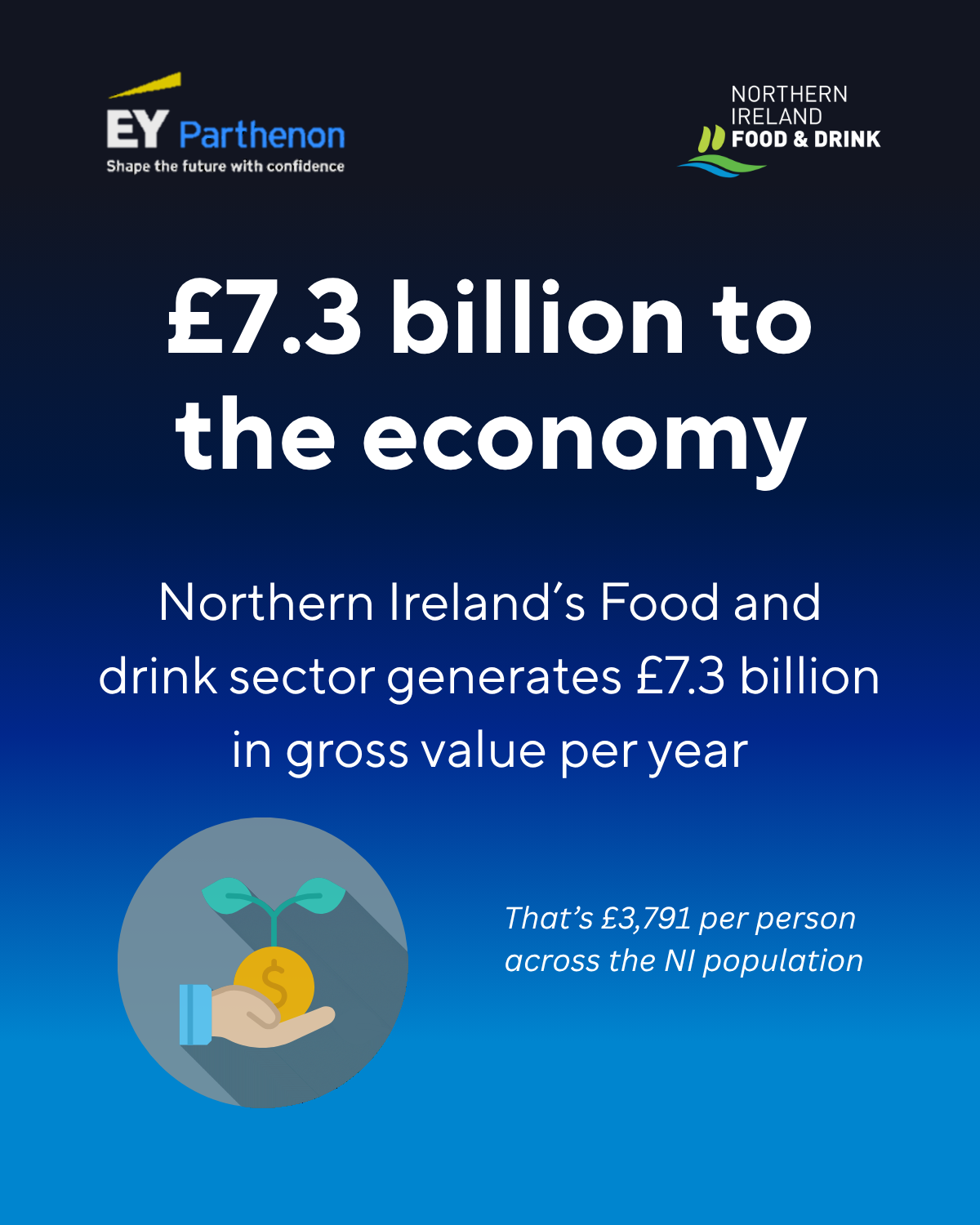
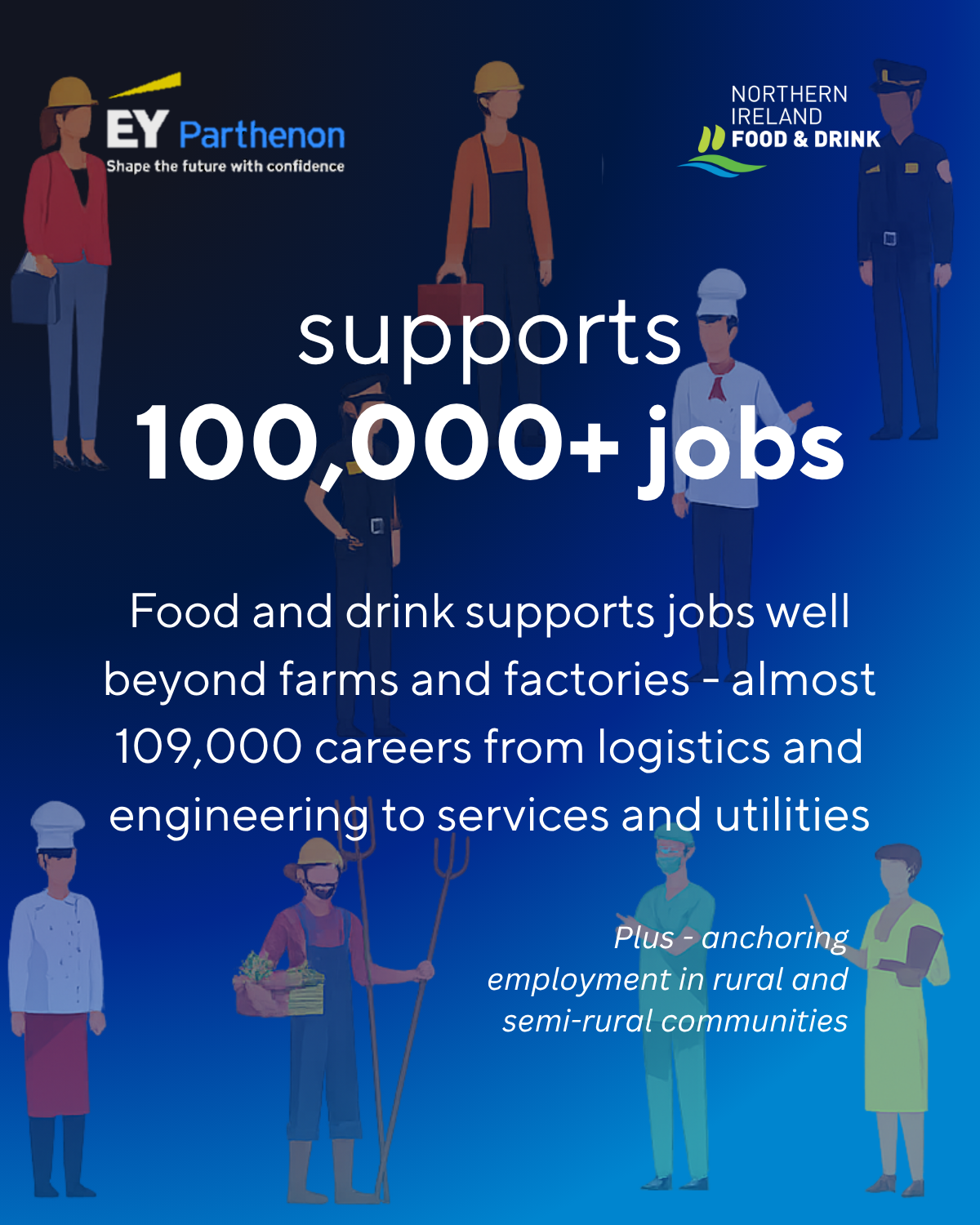
Northern Ireland’s food and drink sector generates £7.3 billion in economic value, supports almost 109,000 jobs, and plays a vital role in supplying safe, affordable food across the UK and Ireland, according to a major industry report.
The Economic Impact Assessment, commissioned by the Northern Ireland Food and Drink Association (NIFDA) and delivered by EY, highlights the fundamental role of the sector in driving regional economic growth, sustaining rural communities, and strengthening food security and resilience across these islands.
The findings were launched at an event at Parliament Buildings, Stormont, hosted by Robbie Butler MLA, Chair of the NI Assembly’s Agriculture, Environment and Rural Affairs Committee.
Economic value at the heart of Northern Ireland’s economy
The report shows that in 2024, Northern Ireland food and drink generated Gross Value Added (GVA), equivalent to £3,791 per person, with strong multiplier effects across supply chains, services and local rural economies.
Employment supported by the sector extends beyond direct manufacturing and farming roles. It underpins economic activity in logistics, engineering, utilities and professional services while also anchoring jobs in rural and semi‑rural communities.
Michael Bell OBE, Executive Director of NIFDA, said:
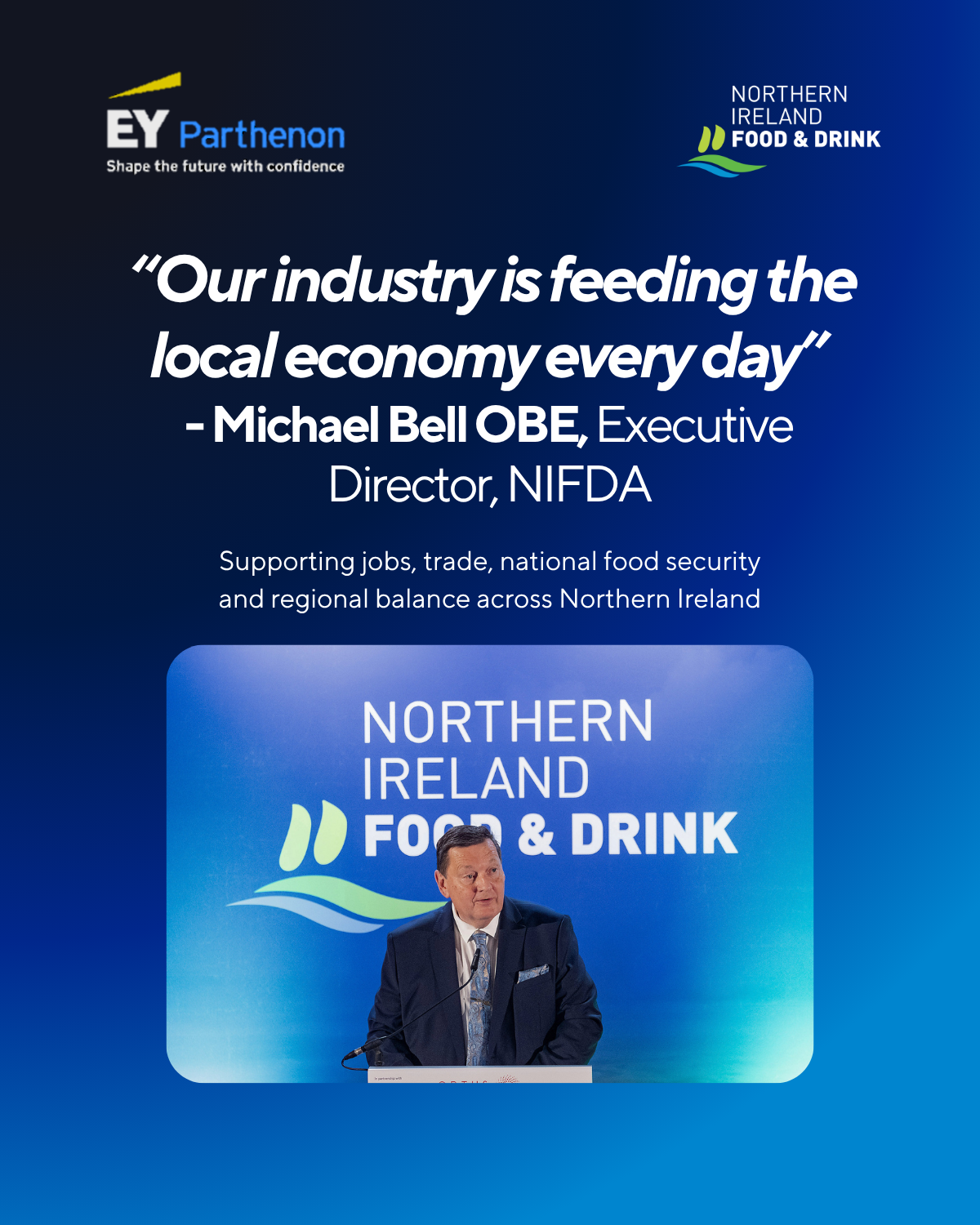
“This independent report gives us an up-to-date picture of the role food and drink is playing for the economy and our society. Food and drink delivers billions in economic value, supports tens of thousands of jobs across the supply chain, and plays a unique role in sustaining balanced regional growth. Our industry is feeding the local economy every day, in every part of Northern Ireland.”
A strategic asset for UK and Ireland food security
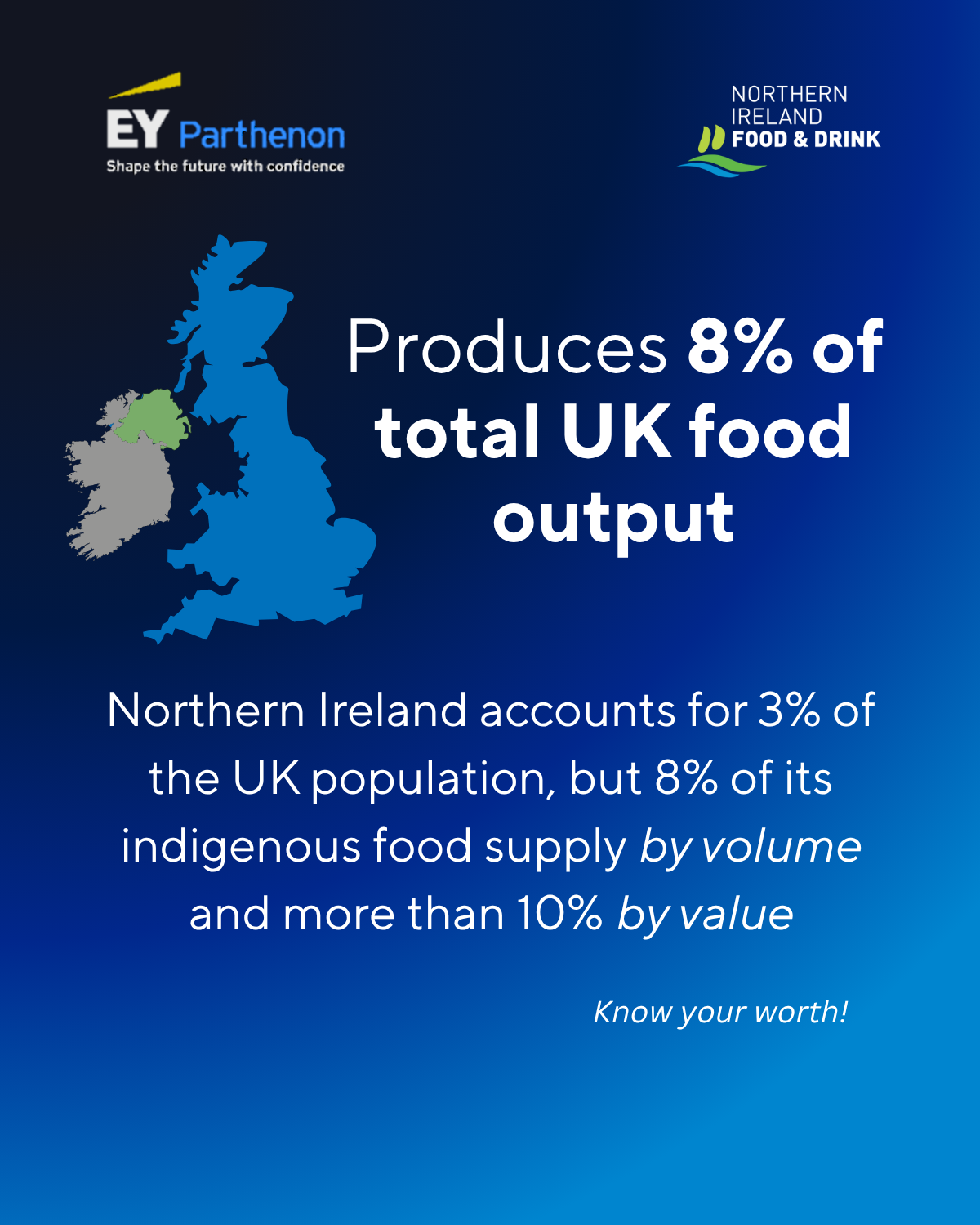
Despite accounting for less than 3% of the UK population, Northern Ireland produces around 8% of total UK food output by volume and more than 10% by value, with the local industry having particular expertise in high‑value, protein‑rich foods that are central to everyday consumption.
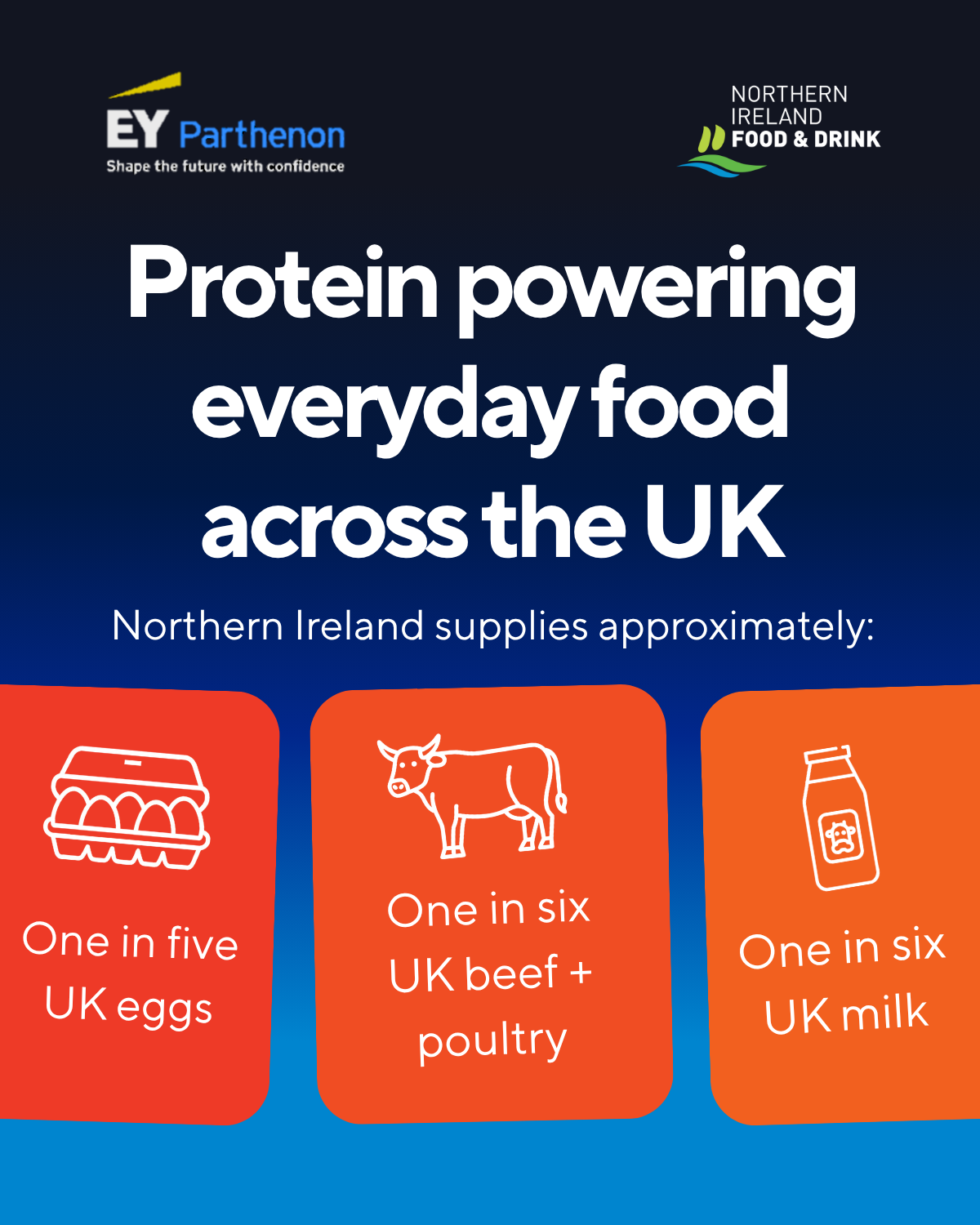
The report highlights that Northern Ireland supplies around one‑fifth of UK egg production and approximately one‑sixth of UK dairy, beef and poultry output.
Michael Bell added: “These are precisely the areas where strong domestic production is most critical to reducing import reliance, moderating exposure to global supply shocks, and safeguarding affordability for consumers.”
Robbie Butler MLA, Chair of the Agriculture, Environment and Rural Affairs Committee, said: “This report underlines just how strategically important Northern Ireland’s food and drink sector is: not just to our own economy, but to secure food supply across the UK and Republic of Ireland. At a time of global uncertainty, strong indigenous food and drink production matters more than ever, and we as politicians have a responsibility to ensure the policy environment supports a sector so central to jobs, growth, resilience and food security.”
Sustainability, resilience and enabling investment
The report also examines the role of Northern Ireland food and drink in meeting sustainability goals. It finds that while agriculture accounts for a significant share of emissions in Northern Ireland, , the analysis shows that productivity‑led, sustainability‑linked investment can deliver economic growth and emissions reductions together, while prolonged cost pressure and delayed investment risk eroding value and resilience over time.
Simon MacAllister, Partner at EY, said:
“Northern Ireland’s food and drink sector is central to the local economy, underpinning jobs, investment, regional balance and resilience well beyond its own footprint. Our analysis finds that the sector’s future will be shaped less by volume growth and more by productivity, cost resilience and sustained investment across the value chain. The central challenge is not ambition, but delivery and coordinated planning, regulatory and infrastructure processes are essential to unlock the investment needed to secure long term growth, resilience and environmental improvement.”
Prioritising sustainable growth
NIFDA has called on government to work in partnership with industry to enable investment, improve planning predictability, and ensure policy frameworks support economic growth alongside environmental outcomes. Michael Bell OBE added:
“Our industry is committed to sustainability and innovation, but businesses need confidence to invest. That means stable policy signals, joined‑up decision‑making and planning processes that recognise the system‑wide benefits of investment. If we want to secure food supply, protect jobs and improve environmental performance, we have to enable economic growth.”
Read the full report here: https://nifda.co.uk/wp-content/uploads/2026/04/NIFDA-Economic-Impact-Study-FINAL-290426.pdf